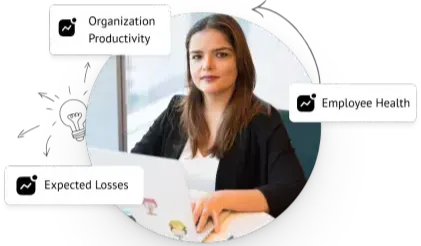





Group Health Insurance benefit for the organization can be summarized as follows:
- Motivated Employees: Employees feel obliged which inculcates the belongingness and loyalty factor amongst them. The employees feel less stressed and relaxed as far as their spouse, children, and dependent parents’ medical needs are under consideration. This gives rise to a tension-free, happy and motivated workforce.
- Reduced Attrition Rate: Group health policy forms one of the hygiene factors for many industries and an organization without these benefits may even have difficulty in acquiring and retaining good talent. This also plays a crucial role in employee retention.
- Inexpensive Employee Benefit: The group health insurance premium is very much lower than individual health insurance. Also, the premium payable against group policies is tax-deductible for the organization.
- Promotes a Healthy Workforce: It adds to the productivity of an organization by avoiding frequent absenteeism by keeping the employees’ healthcare expenses covered. Group health insurance even covers maternity expenses from day 1.
- Promotes Employer Brand: Better employers are recognized for their employee-centric policies. It adds a special quotient in the job satisfaction amongst the employees which is a key element for the growth of any organization.
Key Takeaways
-
The “Peace of Mind” Quotient: When an employee knows their spouse, children, and dependent parents are covered, they work with “cent percent efficiency.” This emotional security is a primary driver of workplace motivation.
-
Hygiene Factor for Acquisition: In 2026, health insurance is no longer an “extra.” It is a basic hygiene factor; companies without a robust group policy often struggle to attract skilled professionals.
-
Maternity from Day 1: Unlike individual plans that have 2–4 year waiting periods, group plans cover maternity and newborn expenses from Day 1. This is a critical benefit for young families reaching milestones in June 2026.
-
Shared Cost Efficiency: As seen in the case study, a 60:40 premium split makes comprehensive coverage incredibly affordable for employees (e.g., just ₹400/month for a ₹4,800 annual share), ensuring immediate protection without financial strain.
-
The Social Safety Net: Group insurance often acts as a life-saver for employees with aging parents. It provides immediate access to funds for sudden medical emergencies that could otherwise “cost a fortune.”
Case for Group Health Insurance Benefits
Modems Enterprises has bought a group health insurance policy for its employees. Under this, the employees are entitled to avail of the Medical Policy offering sum insured worth Rs. 100,000. In a typical situation, the premium comes to around Rs. 12,000 per annum, which both the parties shares i.e. the employer and employee in the ratio of 60:40. In this case, the employer and the employee share come to Rs. 7200 and Rs. 4800 p.a. respectively.
Aseem Rawat, currently working as an executive in the sales vertical of Mordims Enterprises quoted “It really became quite difficult for me to manage when I got to know that my mother is suffering from a serious illness. At that time I did not have sufficient balance in my account to cope up with the cost of meeting her sudden medical needs. It could have cost me a fortune if the group insurance policy had not been there. I am really thankful and obliged to my organization which had the insurance cover for all of its employees as soon as they joined the organization”.
Summary: Strategic Benefits for the Organization
The payment of premium initially may sound like an expense. However, it is worth doing when the organization creates satisfied employees who work with cent percent efficiency and utmost loyalty.
Additional Read: What are the advantages of Group Health Insurance?
Frequently Asked Questions (FAQs)
Q1: Is it better for the company to pay the full premium or share it with the employee?
A) Many 2026 organizations prefer a shared model (e.g., 60:40 or 70:30). This allows the company to provide a higher Sum Insured or add better family benefits while keeping the budget sustainable, and it gives employees a sense of “ownership” over their policy.
Q2: Can I use this policy for my parents’ “Serious Illness” immediately after I join?
A) Yes. One of the greatest advantages of a group policy is that Pre-existing Diseases (PED) are covered from the moment you join. As highlighted in the case study, employees can avail of benefits for their parents’ sudden medical needs right away.
Q3: How does providing health insurance reduce “Absenteeism”?
A) By covering healthcare costs and encouraging regular check-ups, employees are more likely to seek timely medical intervention. This prevents minor health issues from turning into long-term illnesses, keeping the workforce present and productive.
Q4: Are maternity expenses covered for both normal and C-section deliveries?
A) Generally, yes. Group policies cover both types of deliveries from the first day, though they often have specific sub-limits (e.g., ₹50k for normal and ₹75k for C-section). This is a vital feature for your upcoming family milestone in June.
Q5: Is the employer’s share of the premium considered a “Taxable Perk” for the employee?
A) No. In 2026, the health insurance premium paid by the employer is not considered a taxable perquisite for the employee. It is a win-win: the employer gets a tax deduction, and the employee gets a tax-free benefit.
About The Author
Mayank Sharma
MBA Finance
He is a professional who brings extensive knowledge and expertise to the field of group health insurance. He has dedicated 7years to helping individuals and businesses navigate the complexities of insurance. Having worked closely with numerous clients and insurance providers, he deeply understands the nuances of group health insurance policies. With a reputation for providing insightful and informative content, he leverages his industry experience to educate readers about the importance of group health insurance and its benefits. Through their articles, Mayank Sharma aims to empower individuals and businesses to make informed decisions about their healthcare coverage, ultimately promoting healthier and more secure communities.