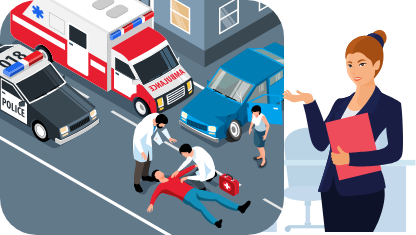


Although all kinds of organizations should include the risk of injury to their workers and employees, it is usually the ones with higher chances of an accident at the workplace, who must buy a Group Personal Accident insurance cover.
Key Takeaways
-
Segmented Hazard Pricing: Insurance underwriters do not price corporate risk uniformly; premiums are fundamentally tied to whether an organization is classified as high, medium, or low risk based on its core daily operations.
-
The Standalone Necessity: For high-risk sectors like mining and drilling, a standalone GPA policy is necessary to secure heavy disability limits that standard health plans cannot provide.
-
The Rider Advantage: Low-risk companies, such as software development firms, can secure structural uniformity and save on corporate capital by attaching a personal accident cover as a rider to their group health plan.
-
Premium Mitigation via Safety: High-risk businesses can actively lower their premium loadings by implementing modern safety methods, automated check systems, and rigid balances on the field.
-
Administrative Distinction: Within the exact same conglomerate, different business units (e.g., corporate office vs. coal mine) should be underwritten separately to optimize overall premium spending.
-
Universal Financial Shield: Independent of the risk tier, a structured accident plan ensures that unexpected physical trauma does not result in an unmanageable out-of-pocket financial burden for the employee’s family.
Depending on the risk their employees are exposed to, the following businesses must buy Group Personal Accident cover:
- High-Risk Organizations:
- Mining Business
- Oil/Gas Exploration Units
- Offshore research/drilling units
- Medium Risk Organizations:
- Manufacturing Units
- Transporters
- Low-Risk Organizations:
- Software Development firms
- Services firms
- Administrative staff in manufacturing organizations
Employees in manufacturing companies, mining companies, offshore research organizations, transportation companies, etc. are more vulnerable to injuries and accidents due to their risky operations.
Though the higher risk with category one companies causes the premium to be higher. Can minimize it by applying modern safety methods and systems.
Case for Group Personal Accident Cover
QPR Ltd. is a multinational company with two businesses in India. One of the units deals with software development, and the other is the coal mining unit. Taken care of both the activities by the different management and not at all interrelated in any aspect.
The coal mine is in the northeastern part of India and considers one of the most modern coal mining operations in India. The firm maintains a system of checks and balances to ensure that the workers are safe and taken care of as soon as possible in case of an accident. The management of the coal unit, though able to maintain a better record of incident-less mining operations, decided to take up a group accident insurance cover. In order, to protect the employees and the firm financially if an incident occurs.
Summary Table: Organizational Risk Categories & GPA Alignment
| Risk Category | Target Industries | Occupational Vulnerability | Preferred GPA Structure | Premium Impact |
| High-Risk | Mining, Oil/Gas Exploration, Offshore Drilling. | Severe: Exposed to heavy machinery, structural collapse, and deep-sea hazards. | Standalone, highly customized GPA policy with maximum disability caps. | High: Premium loadings are applied due to elevated operational danger. |
| Medium-Risk | Manufacturing Units, Logistics & Transportation. | Moderate: Exposed to factory floor machinery impacts, transit crashes, and cargo handling injuries. | Balanced standalone policy or a comprehensive group accident cover. | Moderate: Linked directly to past claims history and safety track records. |
| Low-Risk | Software Development, Service Sectors, Corporate Admin Staff. | Minimal: Primarily desk-bound or administrative roles with low occupational hazards. | Often bundled as a cost-effective rider to an existing Group Health Insurance plan. | Low: Nominal per-capita rates due to a low probability of workplace mishaps. |
The insurance plan made both the management and the employees happy since covered both financially for unfortunate events.
On the other hand, the administration of the software development unit has taken the Group Personal Accident cover as a rider to the already running health insurance plan for the employees. The decision wasn’t a difficult one as the corporate can maintain the uniformity of benefits across the operations at a minimal cost.
Frequently Asked Questions (FAQs)
1. What types of businesses are classified as high risk for group personal accident insurance?
A) Insurers classify organizations involved in heavy industrial operations, such as mining businesses, oil and gas exploration units, and offshore research or drilling units, as high-risk categories. These sectors experience higher premium rates because their field staff are routinely exposed to severe occupational hazards and catastrophic accidental injuries.
2. Can a software development firm buy group personal accident insurance as a rider?
A) Yes, low-risk organizations like software development firms, consulting companies, and administrative services can easily include personal accident protection as a rider to an existing group health insurance plan. This allows corporate entities to maintain a uniform benefits structure across their office staff at a minimal incremental cost.
3. How can a mining or manufacturing company reduce its group accident insurance premiums?
A) While high-risk industries naturally attract higher insurance premiums, enterprises can reduce their underwriting costs by adopting modern safety systems and preventive risk mitigation protocols. Demonstrating a clean operational history with minimal workplace incidents gives management stronger leverage to negotiate lower premium loadings during policy renewal.
4. Why should a company insure its administrative staff separately from factory workers?
A) In a multi-tiered corporate structure, the administrative staff faces a significantly lower risk profile than factory or field laborers. Separating underwritten groups based on low-risk vs. medium-risk categories allows the finance department to optimize premium allocations, avoiding paying high industrial rates for desk-bound office employees.
5. Does group personal accident insurance cover off duty accidents for high risk employees?
A) Yes, comprehensive group personal accident insurance plans typically provide 24/7 worldwide coverage, protecting eligible workers against accidental death or permanent disablement regardless of whether the mishap occurs on duty at the job site or off duty during personal hours.
Written By-
Gunjan Saxena
MBA Insurance Management
With a robust background in the insurance industry, Gunjan is a seasoned professional who brings 10 years of expertise to group personal accident insurance. Throughout her career, she has demonstrated a deep understanding of the intricacies and nuances of insurance products, particularly in personal accident coverage. Having worked closely with both individuals and businesses, she has gained valuable insights into the diverse needs and challenges faced by clients seeking insurance protection. Her experience encompasses designing tailored insurance solutions, providing expert advice, and guiding clients through the insurance process with confidence and clarity.
Through her articles, Gunjan aims to educate and inform readers about the importance of group personal accident insurance and the benefits it offers in safeguarding against unforeseen events.