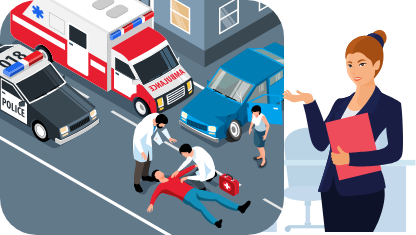


Accidental death and dismemberment insurance (AD&D) as the name suggests, covers accidental death and dismemberment. This additional rider comes along with the life insurance policy and the health insurance policy. It pays you or your beneficiary in case of death by accident and dismemberment. The loss includes the loss of any of your body parts or the capability to use them. The body parts included in the coverage are limbs, speech, eyesight, and hearing.
Key Takeaways
-
The Double Indemnity Concept: When added to a base life policy, an AD&D rider effectively doubles the payout to your beneficiaries if your death is directly caused by a violent, unexpected accident.
-
Functional Loss Coverage: Dismemberment protection is not limited to physical amputations; it also triggers if an accident permanently destroys your capability to use a body part, such as irreversible nerve damage.
-
Strict Peril Exclusions: AD&D policies feature rigid guardrails. They systematically exclude deaths or injuries resulting from suicide, unprescribed drug overdoses, and professional racing track activities.
-
Risky Sport Limitations: Standard riders do not cover physical trauma sustained during high-risk recreational hobbies such as skydiving, bungee jumping, or extreme sports unless explicitly specified.
-
The Schedule of Payment: Payouts for non-fatal injuries are strictly tiered. Insurers consult a predetermined schedule that states the exact percentage of the sum assured payable for localized losses (e.g., losing vision in one eye).
-
Universal Commute Protection: Even individuals working in safe, desk-bound office environments face significant exposure during daily night commutes, making an accidental rider a crucial risk mitigation tool.
AD&D rider is also known as the double indemnity rider, which comes with strict terms and conditions and limited coverage. Also, to add this coverage you need to pay double the amount that is otherwise payable.
A schedule of payment specifies the percentage of the amount payable in different circumstances. Also, AD&D Insurance specifies the circumstances that the policy doesn’t cover. Generally, it doesn’t cover suicide and death due to an overdose of non-prescribed drugs. It also excludes the death of a professional athlete on the racing track and loss of body parts/death due to skydiving and other risky sports.
Click here to know what is covered under group personal accident Insurance
Case for Accidental Death & Dismemberment Insurance
Harsh Chauhan, an engineer, works for an engineering firm as the chief architect and designer. While his job gives him rather a safe environment to work in, he had bought an AD&D rider along with his life policy at the insistence of his insurance advisor.
Last month, while returning home from the office, he met with a very unexpected accident late at night. Though there was irreparable damage to his car, miraculously he survived, with minor scratches. To his amazement, he had suffered a concussion in his right ear and lost his eyesight for a few weeks in the right eye.
Summary Table: AD&D Insurance Structure & Terms
| Feature | Detailed Provision / Percentage | Impact on Financial Recovery |
| Accidental Death | 100% Payout (Double Indemnity) to the designated beneficiary. | Provides immediate wealth replacement for families after a fatal crash. |
| Dismemberment Scope | Loss of physical limbs, or the loss of capability to use them. | Funds home modifications, prosthetics, and adaptive living expenses. |
| Sensory Loss Cover | Permanent loss of speech, eyesight, or hearing without recourse. | Covers specialized medical aids (e.g., hearing aids) and rehabilitation. |
| Payout Framework | Regulated via a strict, contractually defined schedule of payment. | Offers predictable, scaled payouts matching the injury’s severity. |
| Premium Structure | Requires an additional payment over the base policy rate. | Delivers large capital protection in exchange for a targeted premium. |
He called his advisor to personally thank him for insisting on AD&D cover for him as, without it, he would have had to bear the treatment expenses for the eye himself. His hearing damage is permanent but fortunately, he did not have to spend money on a hearing aid due to the compensation received from the insurer.
Frequently Asked Questions (FAQs)
1. What is accidental death and dismemberment insurance coverage?
A) Accidental death and dismemberment insurance (AD&D) is a specialized policy or insurance rider that pays a fixed financial benefit if the insured dies or suffers a severe physical injury due to an accident. The coverage handles both accidental loss of life and dismemberment, which includes the physical loss or permanent loss of use of limbs, speech, eyesight, and hearing.
2. Why is an AD&D policy rider called a double indemnity rider?
A) An AD&D rider is often called a double indemnity rider because it is designed to pay an additional lump-sum benefit equal to the face value of your base policy if you die in a covered accident. This effectively doubles the total financial compensation received by your designated beneficiaries.
3. What physical body parts are included in a standard dismemberment insurance schedule?
A) A standard dismemberment insurance schedule includes protection for the loss of arms, legs, hands, and feet. It also extends to vital sensory faculties, providing specific payout percentages if an accidental injury results in the permanent loss of speech, eyesight (blindness), or hearing (deafness).
4. What are the common exclusions under an accidental death and dismemberment insurance policy?
A) Standard AD&D policies do not cover death or dismemberment caused by natural illnesses, medical diseases, or suicide attempts. Furthermore, insurers exclude claims arising from an overdose of non-prescribed drugs, injuries sustained during illegal activities, or incidents involving high-risk sports like skydiving and professional racing track events.
5. How does the schedule of payment work for a partial dismemberment claim?
A) When a non-fatal accident occurs, the insurer refers to a contractually defined schedule of payment to settle the claim. This schedule outlines what percentage of the total sum assured will be paid out based on the specific injury—for instance, losing a single hand might trigger a 50% payout, whereas losing multiple limbs or total vision will trigger a full 100% payout.
6. Does an accidental death rider cover medical expenses for minor scratches and concussions?
A) No, a standard accidental death rider does not pay for minor, temporary injuries like surface scratches or brief concussions unless they result in long-term, verifiable dismemberment or permanent sensory damage. However, if the trauma causes a permanent impairment, such as continuous hearing loss requiring a hearing aid, the fixed compensation can be utilized to cover those associated medical costs.
Written By-
Gunjan Saxena
MBA Insurance Management
With a robust background in the insurance industry, Gunjan is a seasoned professional who brings 10 years of expertise to group personal accident insurance. Throughout her career, she has demonstrated a deep understanding of the intricacies and nuances of insurance products, particularly in personal accident coverage. Having worked closely with both individuals and businesses, she has gained valuable insights into the diverse needs and challenges faced by clients seeking insurance protection. Her experience encompasses designing tailored insurance solutions, providing expert advice, and guiding clients through the insurance process with confidence and clarity.
Through her articles, Gunjan aims to educate and inform readers about the importance of group personal accident insurance and the benefits it offers in safeguarding against unforeseen events.