


Introduction
The premium for a Group Personal Accident (GPA) policy depends on the sum insured chosen, the type of work employees do, the size and make-up of the group, the benefits and add-ons selected, and the insurer’s underwriting terms. In addition, claims history can affect renewals. As a result, no single market rate applies to every employer. Instead, get written quotations and compare benefits, limits and exclusions as well as price.
Group Personal Accident insurance pays benefits when an employee dies or is disabled in an accident. For employers, however, the question soon turns to cost: what will it cost, and why do two quotations for the same workforce differ?
The right price for Personal Accident Insurance is not simply the lowest number on a quotation. Rather, it is a premium that buys the cover your employees actually need, on terms you understand. This guide explains how insurers build a GPA premium, how the choice of cover structure changes the amount insured, what existing Group Term Life (GTL) cover does and doesn’t change, and how to compare quotations properly.
What Is a Group Personal Accident Insurance Premium?
A GPA premium is the amount an employer pays the insurer for accident cover for a group of employees over the policy period, usually a year. In other words, it reflects the insurer’s view of how likely and how costly accident claims will be for that group, given the cover chosen.
The premium is tied to the cover. So if you raise the sum insured, add benefits or include higher-risk roles, the insurer’s exposure rises. For a reminder of what the cover includes, see what a GPA policy covers.
Three amounts are worth separating:
- Quoted premium – the insurer’s price for the cover, before tax.
- GST – tax added to the premium. The Department of Financial Services states that the 18% GST rate applies to group insurance policies. However, the exemption from 22 September 2025 covers individual life and health policies only.
- Total payable – premium plus GST and any other charges stated in the quotation.
How Is GPA Premium Calculated?
Insurers price GPA by assessing the group’s accident risk and the cover requested, so the premium is the result of several factors rather than a single published rate. Shriram General Insurance, for example, lists the nature of work and occupation, industry risks, past claims and loss ratio, the age and gender profile, group size and composition, the coverage limit and add-ons. However, each insurer weights these factors in its own way.
Sum Insured
The sum insured is the benefit amount for each employee, and insurers use it to calculate death and disability payouts. A higher sum insured increases what the insurer could pay, so it usually increases the premium. The relationship isn’t the same with every insurer, though, and the benefit structure matters too.
Also, insurers do not calculate every benefit the same way. Permanent partial disability is often paid as a percentage of the sum insured, while temporary disability may be a weekly amount and medical expenses may have a separate limit. So check how the policy defines each benefit.
Occupation Class and Nature of Work
Insurers may charge more for employees who face more physical risk at work. For instance, desk-based staff generally present a different accident profile from field sales teams who travel, technicians, drivers, or workers on construction or factory sites.
Generally, insurers classify occupations into risk categories. For example, a United India Insurance GPA schedule from 2021 lists insured persons under “Risk Category I” and “Risk Category II”. Category names, definitions, and loadings vary by insurer, so ask each one how it has classified your employees. Also, one organisation may have staff in several categories.
Group Size
Generally, the number of employees affects how the insurer underwrites the group. For example, a larger group spreads risk across more people, and insurers may give more weight to its own claims experience. Group size alone doesn’t guarantee a lower rate, because the occupation mix, sum insured, and benefits still drive the price.
Insurers may also set minimum group sizes or participation rules. Therefore, check these in the quotation.
Add-ons and Benefit Structure
Likewise, optional extensions – such as medical expenses, children’s education or ambulance cover – usually add to the premium (see below).
Claims History
At renewal, insurers may review the group’s past claims. For example, Shriram General calls this “experience rating”, which uses the group’s own claims and loss history (see below).
Other Underwriting Factors
Other factors may apply, depending on the insurer:
- Age and gender profile of the workforce (listed by Shriram General).
- Geography and travel – where employees work and travel.
- Policy duration – SecureNow’s infographic page suggests that multi-year arrangements may help; confirm availability and terms with the insurer.
- Benefit tables – some insurers offer set tables, for example death only, or death plus all disability benefits. The UIIC schedule shows both.
| Pricing factor | How it may influence premium | Questions employers should ask | What must be verified |
|---|---|---|---|
| Sum insured | Higher cover usually means a higher premium | How does the premium change at different SI levels? | Benefit definitions for each SI |
| Occupation and job duties | Riskier roles may be priced higher | Which risk category is each role in? | The insurer’s classification of your staff |
| Group size | Affects how risk is assessed; no guaranteed discount | Are there minimum numbers or participation rules? | Eligibility and participation terms |
| Add-ons and benefits | Each extension may add cost | What does each add-on cost separately? | Limits and exclusions for each add-on |
| Claims history | May influence renewal pricing | What claims data is used, and how? | Renewal terms in writing |
| Other underwriting factors | Age profile, geography, travel, duration | Which other factors apply to this quote? | Quotation terms and conditions |
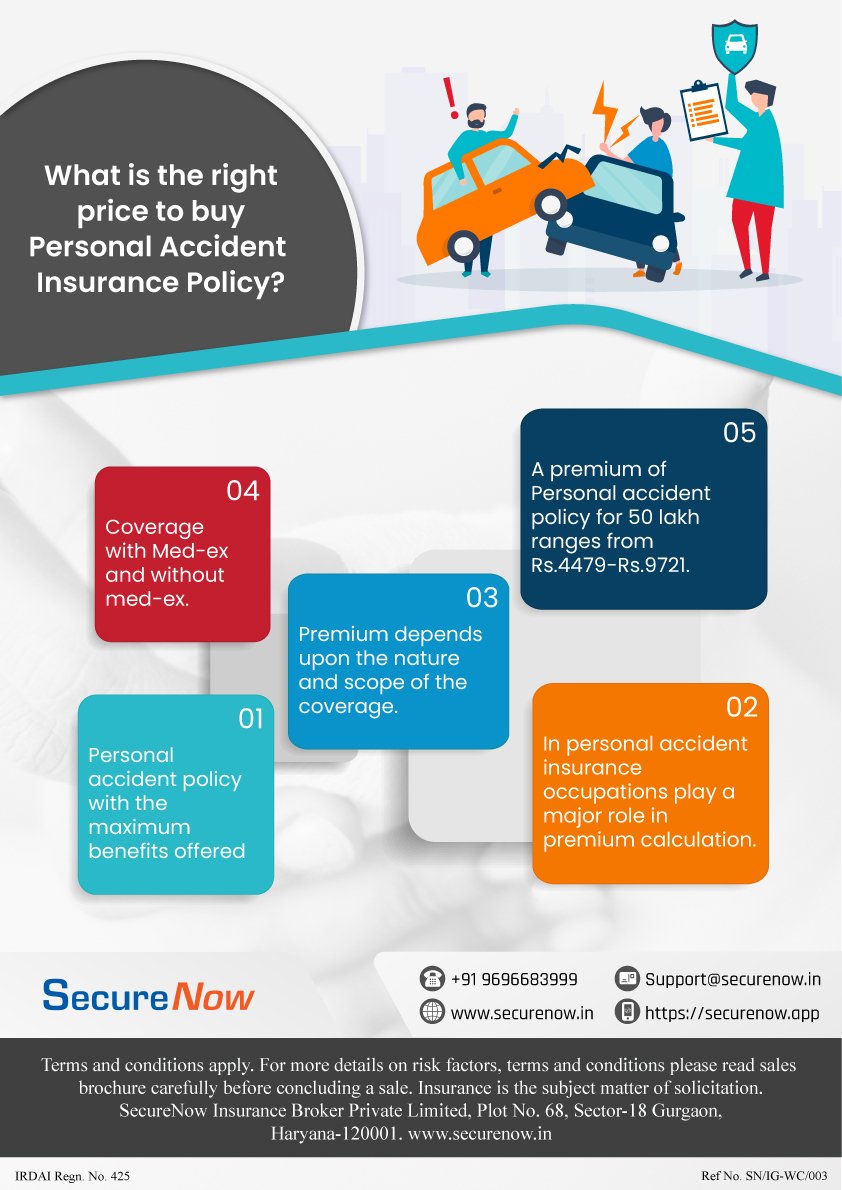
Flat Sum Insured vs Salary-Multiple Sum Insured
Employers can usually set GPA cover either as the same fixed amount for everyone or as a multiple of each employee’s salary, where the insurer offers that option. This choice therefore changes how much cover each person gets and the insurer’s total exposure.
Flat sum insured. Every eligible employee, or every employee in a category, gets the same cover – for example, ₹10 lakh each. As a result, it is simple to administer and easy to explain.
Salary-multiple sum insured. Cover is linked to salary – for example, three times annual salary. As a result, higher earners get more cover, which tracks their income loss more closely. However, it needs accurate salary data, a clear definition of “salary” (basic pay, gross pay or cost to company), and rules for updating it when pay changes. Insurers may also apply a maximum cap. SecureNow explains graded and salary-linked covers in more detail, including designation-based grades.
Overall, neither approach is automatically cheaper. The total cover – and so the premium – depends on your salary spread and the figures chosen.
| Factor | Flat sum insured | Salary-multiple sum insured |
|---|---|---|
| How cover is determined | Same amount per employee or category | A multiple of each employee’s defined salary |
| Effect of different employee salaries | None – everyone gets the same cover | Cover rises with salary |
| Administrative requirements | Employee list only | Accurate, current salary data and a salary definition |
| Potential effect on total insured exposure | Fixed: employees × flat amount | Depends on the payroll, the multiple and any cap |
| Potential effect on premium | Predictable as headcount changes | Changes with salary increases and new hires |
| Important checks before selection | Is the amount adequate for higher earners? | Salary definition, caps, update rules, insurer acceptance |
Illustrative comparison: cover exposure, not premium
Hypothetical figures for illustration only. Specifically, this example compares the total amount insured, not the premium.
Assumptions: five employees; a flat sum insured of ₹10,00,000 each; or a salary multiple of 3× annual salary, shown with and without a ₹30,00,000 cap.
| Employee | Annual salary | Flat SI | 3× salary | 3× salary, capped at ₹30 lakh |
|---|---|---|---|---|
| A | ₹3,00,000 | ₹10,00,000 | ₹9,00,000 | ₹9,00,000 |
| B | ₹4,80,000 | ₹10,00,000 | ₹14,40,000 | ₹14,40,000 |
| C | ₹6,00,000 | ₹10,00,000 | ₹18,00,000 | ₹18,00,000 |
| D | ₹9,00,000 | ₹10,00,000 | ₹27,00,000 | ₹27,00,000 |
| E | ₹18,00,000 | ₹10,00,000 | ₹54,00,000 | ₹30,00,000 |
| Total exposure | ₹50,00,000 | ₹1,22,40,000 | ₹98,40,000 |
In this group, the salary-multiple structure insures much more in total, so it would likely cost more. Employee A, however, gets less cover than under the flat option. In addition, a cap changes the result significantly. On the other hand, with a different salary spread or a lower multiple, the comparison could go the other way. In any case, actual benefits depend on the policy schedule, definitions and limits.
How Add-ons and Benefit Limits Affect GPA Premium
Each optional benefit adds to the insurer’s potential liability, so add-ons usually increase the premium. For example, SecureNow lists 15 GPA add-on covers, including accidental medical expenses, children’s education benefit and ambulance charges. However, not every insurer offers every add-on.
Moreover, limits matter as much as the add-on itself. A medical-expense extension capped at a small percentage of the sum insured costs less than one with a higher limit. SecureNow explains how medical expenses under GPA are limited.
The core benefit structure also affects price. Covering only accidental death costs less than covering death plus permanent and temporary disability, because fewer events trigger a payout.
Ask insurers to price each add-on separately, so you can judge its value rather than accepting a bundle.
Can Claims History Affect GPA Renewal Rates?
Yes, it can. Insurers may review a group’s claims experience at renewal, but there is no fixed rule linking a given claims record to a given premium change. A group with frequent or large claims may face a higher renewal quotation; a group with few claims may be in a stronger position to negotiate. SecureNow’s infographic page notes that employers with low claims over several years may obtain lower premiums. In short, that is possible, not guaranteed.
Renewal pricing can also change for other reasons: more or fewer employees, a different occupation mix, a higher sum insured, new add-ons, or changes in the insurer’s underwriting approach. In other words, last year’s rate is not a promise for next year. For this reason, keep your own claims records, so you can discuss renewal terms with the facts in front of you.
GPA GTL Bundling: Can Existing GTL Cover Reduce Costs?
GPA and Group Term Life (GTL) cover different risks, and having GTL does not by itself lower the GPA rate. It can, however, lead to a different GPA design that may cost less.
Group Personal Accident pays for accidental death and, depending on the policy, permanent total disability (PTD), permanent partial disability (PPD), temporary total disability (TTD), and add-ons. Group Term Life insurance pays a death benefit when an employee dies from almost any cause – illness or accident – subject to its terms. SecureNow’s GTL page notes that accidental death, disability, and critical illness riders are available.
When an employee has both covers and dies in an accident, both policies normally pay. When the death is from illness, only GTL pays.
| Factor | Group Personal Accident (GPA) | Group Term Life (GTL) |
|---|---|---|
| Primary purpose | Financial support after accidental death or disability | Financial support to the family after death |
| Main covered event or trigger | An accident causing death or disability | Death from covered causes, natural or accidental |
| Relationship to accidental injury | Central – cover applies only to accidents | Not required, except for an accident rider |
| Relationship to death benefits | Accidental death only | Death from covered causes |
| How benefits are determined | Sum insured; percentages for partial disability; weekly TTD amount | Sum assured per member |
| Important policy checks | Disability definitions, add-ons, exclusions | Exclusions, riders, eligibility, free cover limit |
Can Existing GTL Cover Reduce the GPA Premium?
SecureNow’s source article suggests that an employer with GTL could remove the accidental death benefit from the GPA policy. GTL would then cover all deaths, while GPA would continue to provide disability benefits and add-ons. Because the GPA policy would cover fewer events, the GPA premium would likely fall.
Three things are important to understand:
- This is a cover change, not a discount. In effect, the employer buys less GPA coverage. As a result, families of employees who die in accidents would no longer receive the extra GPA death payout.
- The size of any savings is unverified. The source article’s figure of “approximately 25-40%” cites no data, so you should not rely on it. Instead, only a written quotation for both structures shows the real difference.
- Availability depends on the insurer. Not every insurer may quote GPA without accidental death, or on the same terms. Some may offer a combined quotation; however, ask the insurer to confirm that in writing too.
Therefore, compare the total cost and total cover of both policies together, not just the GPA rate.
Questions employers should ask
- Is a combined GPA and GTL quotation available?
- Is any GPA rate concession offered because GTL is already in place? On what conditions?
- Does a concession apply to all employees, or only some categories?
- How does the premium for GPA without accidental death compare with the full cover?
- Does the GTL policy include an accidental death benefit rider, and at what cost?
- Are limits, exclusions, and benefits equivalent across the options?
- Are renewal terms or minimum participation conditions affected?
SecureNow explains the disability benefits that remain under GPA in its guide to the types of disability covered.
Illustrative GPA Premium Example
We could not verify a current, comparable GPA rate for Indian employer groups, so this section shows how to work through a real quotation rather than estimating a price. Ask insurers for written quotations on the same basis, then complete this worksheet for each one.
| Input | Value required | Source of the value |
|---|---|---|
| Number of eligible employees | Employer’s employee list | |
| Sum insured or benefit structure | Employer’s selected cover | |
| Occupation profile | Employee job categories | |
| Selected add-ons | Policy quotation | |
| Quoted base premium or rate | Verified insurer quotation | |
| Taxes and other charges | Quotation or applicable tax documentation | |
| Total quoted premium | Insurer quotation |
The calculation
- Total payable = quoted premium + GST + any other stated charges
- GST = quoted premium × the applicable rate (18% for group insurance policies, per the DFS FAQ; confirm on the quotation)
- Average cost per insured employee = total payable ÷ number of insured employees
Arithmetic illustration (fictional teaching values)
We invented these figures to show the arithmetic. They are not market rates and not an estimate of what any employer should expect to pay.
| Step | Fictional value |
|---|---|
| Employees insured | 200 |
| Quoted premium (before GST) | ₹1,00,000 |
| GST at 18% | ₹18,000 |
| Total payable | ₹1,18,000 |
| Average cost per employee (₹1,18,000 ÷ 200) | ₹590 |
The average per employee is useful for budgeting, but it can hide differences in cover. An employee in a higher-risk category may cost more to insure than this average suggests.
How to Compare GPA Insurance Quotations
Compare GPA quotations on equal terms – the same sum insured, benefits, and employee data – before comparing prices. After all, the cheapest quotation is not the best value if it covers less.
Quote tool. SecureNow’s Group Personal Accident page has a quote-request tool that asks for contact details and employee count. However, it is a quotation request, not an instant premium calculator. SecureNow does not currently offer a dedicated GPA premium calculator.
| Comparison item | What to compare | Why it matters |
|---|---|---|
| Sum insured | Amount per employee and structure | Different cover means different prices |
| Benefit structure | AD, PTD, PPD and TTD definitions and percentages | Lower disability payouts may explain a lower price |
| Occupation eligibility | Who is covered, and in which category | Excluded roles leave gaps |
| Medical-expense cover or other add-ons | Which are included, and their limits | Add-ons drive price and value |
| Exclusions and conditions | Exclusions, territorial and time-of-day cover | Narrow cover can mean claims are refused |
| Premium before taxes | Quoted premium | Compare like for like |
| Taxes and total payable | GST and other charges | Budget the real cost |
| Claims support and process | Claim channels, documents, support | Affects employees’ experience after an accident |
| GPA-GTL bundling terms | Any combined offer and its conditions | Concessions may carry conditions |
| Renewal and policy conditions | Renewal basis, participation rules, duration | Affects next year’s cost |
Common Mistakes When Comparing GPA Premiums
- Comparing quotes with different sums insured or benefits. So check that every quotation is for the same cover.
- Assuming a larger group always gets a lower rate. Equally, occupation mix and benefits matter.
- Ignoring the occupation classification. So check which category each role is in.
- Overlooking exclusions. After all, a cheaper policy may exclude events your employees face.
- Assuming GTL automatically reduces the GPA cost. Instead, any savings come from changing the cover, or from an offer confirmed in writing.
- Comparing premiums without GST. Instead, budget for the total payable.
- Treating last year’s rate as fixed. In fact, renewal pricing can change.
Conclusion
A GPA premium reflects choices the employer makes – the sum insured, its structure, the benefits and add-ons – as well as the insurer’s view of the workforce’s risk. Therefore, understanding those factors helps you compare quotations on equal terms and avoid paying for cover you don’t need, or losing cover you do.
When you are ready, request a GPA quotation from SecureNow and compare the options for your employees.
This article is general information. Premiums, benefits, and terms depend on the insurer’s underwriting and the policy wording. Insurance is the subject matter of solicitation.
Frequently Asked Questions
Q) How much does Group Personal Accident Insurance cost?
A) There is no single price. Instead, the cost depends on the sum insured, the occupations covered, the group’s size and profile, the benefits and add-ons chosen, and the insurer’s underwriting. So request written quotations based on your own employee data.
Q) How is a GPA insurance premium calculated?
A) Generally, insurers assess the group’s accident risk and the cover requested, looking at factors such as the sum insured, nature of work, group size and age profile, add-ons and past claims. The insurer then adds GST to the quoted premium.
Q) Does the number of employees affect GPA premium?
A) It can affect how the insurer assesses the group, but a larger group doesn’t guarantee a lower rate. Occupation mix, benefits and claims experience also matter. In addition, insurers may set minimum group sizes.
Q) Does a higher sum insured increase the premium?
A) Usually, yes, because the insurer’s potential payout is larger. However, the exact effect depends on the insurer and the benefit structure.
Q) Is a flat sum insured cheaper than salary-multiple cover?
A) Not automatically. Instead, it depends on your salary spread, the multiple, any cap, and the flat amount chosen. Compare the total cover each option produces before comparing premiums.
Q) Can existing GTL cover reduce the GPA premium?
A) Not by itself. An employer with GTL may choose to remove the accidental death benefit from GPA, which would likely lower the GPA premium but also reduce cover. In any case, the insurer must confirm any saving or concession in a written quotation.
Q) Does claims history affect GPA renewal pricing?
A) It can. Specifically, insurers may review a group’s claims experience at renewal, along with changes in headcount, occupation mix and cover. However, there is no fixed adjustment for a particular claims record.
Q) How can an employer compare GPA insurance quotations?
A) First, ask every insurer to quote on the same employee data, sum insured and benefits. Then compare definitions, add-ons, exclusions, premium before GST, total payable, claims support and renewal terms.