



Factory and warehouse insurance plays an important role in an industrial set up which is involved in the manufacturing and storage of goods as well. It is a crucial insurance policy that gives financial coverage in case of loss or damage to the building, and machinery in and outside the premises.
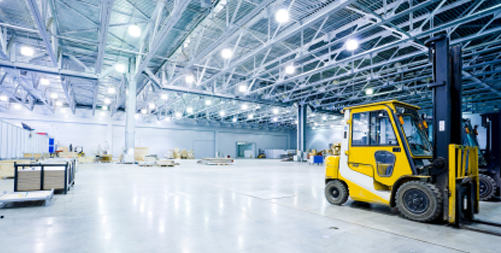
The factory and warehouse insurance company settle the claim as per the reinstatement value of the item. It means if machinery is damaged in an accident due to an insured peril, like fire, earthquake, flood, etc.; the factory and warehouse insurance company will settle the claim as per the sum insured which would be sufficient enough to reinstate or restore the damaged machinery back to its state.
Key Takeaways
-
The Reinstatement Cost Imperative: Standard industrial protection ensures full hardware restoration, paying an amount sufficient enough to reinstate or restore the damaged machinery to its pre-loss state.
-
The Geographic Location Anchor: Underwriting rules tie replacement capital strictly to the original operational footprint, calculating the cost to reinstate the machinery at a place where it was before the loss.
-
The Valuation Upgrade Exclusion: Reinstatement frameworks explicitly isolate basic replacement from modern system refinement, blocking the cost of modification or transferring the machinery to another place.
-
Bypassing Chronological Depreciation: Unlike standard cash value policies, comprehensive factory coverage ensures the insurer will not apply depreciation except for parts with limited life cycles.
-
The Speed of Restoration Rule: Delayed repairs increase systemic business exposures, meaning the sooner the reinstatement of the damaged machinery, the less the amount paid by the insurer for business downtime.
-
The Co-Insurance Adequacy Gate: Unlocking zero-depreciation coverage for complex operational overhauls remains dependent on limits, providing full backing provided the machinery is adequately insured.
Factory and warehouse insurance is important because it provides coverage against various risks that are specific to these types of facilities. These risks can include damage to equipment, loss of inventory, property damage, and liability claims.
Furthermore, factories and warehouses often house valuable machinery and equipment that can be expensive to repair or replace. A comprehensive insurance policy can provide financial protection against these risks, ensuring that the business can continue to operate smoothly even in the face of unexpected events.
Additionally, these facilities can be prone to accidents, such as fires or explosions, that can cause significant damage to the property and pose a risk to employees. An insurance policy can provide coverage for property damage, business interruption, and liability claims that may arise as a result of these events.
Overall, factory and warehouse insurance is an essential investment for any business that wants to protect its assets and ensure that it can continue to operate smoothly in the face of unexpected events.
Read More: How can you minimize the premium for Factory and Warehouse Insurance?
Here, the principle of indemnity applies which says that the ‘cost’ of reinstatement of the machinery would be the ‘cost’ which would have been incurred to reinstate the machinery at a place where it was before the loss. Here the cost would comprise of the following=
- Cost of modification
- Cost of transferring the machinery from one place to the another
- Cost differential of reinstating the machinery at a new place
In those situations, if the policyholder decides to claim the indemnity value of damaged machinery, the insurance company is liable to pay the value of the such property at the time of the damage or as per the amount which would require replacing or repairing the property. Also, the sooner would be the reinstatement of the damaged machinery and its restoration to a normal level, the lesser would be the amount that would be paid by the insurer.
In those cases, where there is a partial loss, all expenses required for the restoration of the damaged machinery would be paid to the extent to which they are insured in the policy. In certain cases, the factory and warehouse insurance company would offer full coverage, provided the machinery is adequately insured. The insurer will not apply depreciation, except for those parts which have limited life and are also subject to wear and tear.
Further, the policy comes with an excess clause, which means, a certain loss or damage would be incurred by the policyholder, and the remaining would be settled by the insurer.
In any case, the insurer settles the claim; it should be as per the factory and warehouse insurance policy document.
Case
Sanjay Ghosh and his wife Anmol run a woolens factory in Pune. Considering the perils that could arise to disrupt their business, Sanjay bought a factory and warehouse insurance policy as well. He got his machinery also covered under factory and warehouse insurance. Last year, one of its manufacturing machines got damaged when rainwater entered its factory.
Read More: How to file a claim under Factory and Warehouse Insurance?
Summary Table: Underwriting Framework and Valuation Dynamics for Factory Assets
| Operational Provision | Technical Valuation Trigger | Component Payout Allowances | Depreciation & Retention Rules | Case Study / Operational Context |
| Reinstatement Value Settlement | Severe damage to industrial fixed assets caused by active perils like fire, earthquake, or flood. | Covers acquisition and replacement bills to restore machinery back to its original state. | Explicitly excludes geographic relocation fees and specialized system layout modifications. | Rainwater entered a facility in Pune, completely destroying core manufacturing machinery. |
| Indemnity Value Option | Electing a raw cash checkout at the exact historical moment of physical damage. | Restricts carrier liability to the basic actual cash value of the structural hardware. | Payout totals are minimized if the structural restoration happens sooner rather than later. | Management must evaluate replacement liquidity layers versus quick cash checkouts. |
| Partial Loss Framework | Minor operational breakdowns or fractional damage affecting localized hardware blocks. | Funds all localized restoration expenses required to return systems to working levels. | Requires that the mechanical systems be adequately insured at full replacement potential. | A targeted infrastructure layout was restored without invoking total write-off metrics. |
| Excess Clause Allocation | Reaching a pre-determined financial threshold during property claim processing. | Forces the company to absorb a fixed baseline layer of the physical loss out of pocket. | The underwriter settles only the remaining claim balance sitting above the retention line. | A manufacturing business covered its baseline retention layer before carrier funds were released. |
As Sanjay had a factory and warehouse insurance policy, he approached the insurer for the claim settlement. As the machinery was completely damaged, the insurer computed the reinstatement value and paid the same which was enough to replace the machinery and brought it back to its original state.
Here, the insurer’s liability was restricted to the coverage and the reinstatement cost of the machinery. To reinstate the machinery, Rs 80,000 was required, and the factory and warehouse insurance company settled the same amount, which also fell under the purview of the insurance coverage.
The insurer did not deduct depreciation and paid the reinstatement value which was enough to reinstate the damaged machinery back to its state it was earlier.
Frequently Asked Questions (FAQs)
1. What is reinstatement value coverage in a factory and warehouse insurance policy?
A)Reinstatement value coverage is a core property valuation framework within industrial insurance lines. If manufacturing machinery or warehouse equipment is destroyed by an insured peril-such as a fire, earthquake, flood, or accidental explosion-the insurance company will settle the claim based on modern replacement costs. This ensures the payout is sufficient to restore the damaged hardware back to its original working state without deducting for age or physical wear.
2. What specific expenses are excluded when calculating the reinstatement cost of machinery?
A) While the policy provides deep liquidity to replace damaged hardware, the principle of indemnity restricts capital upgrades. The contract explicitly dictates that the calculated cost of reinstatement of the machinery will exclude any cost of modification, the cost of transferring the machinery from one place to another, or any positive cost differential incurred by choice of a new location.
3. How does the insurer evaluate a claim if the policyholder chooses the indemnity value option?
A) If a factory management team decides not to physically rebuild or replace the damaged assets, they can choose to claim the raw cash indemnity value. Under this operational clause, the insurance company is liable to pay the value of such property at the time of the damage. The net payout is carefully scaled because the sooner the reinstatement of the damaged machinery occurs, the lesser the final adjustment total will be.
4. Are partial machinery losses covered without depreciation under a warehouse policy?
A) Yes, provided the asset limits are properly sized at the contract’s inception. In the event of a partial loss, all expenses required for the restoration of the damaged machinery would be paid to the full extent of the policy limits. The claims adjuster will not apply depreciation deductions to the repair invoices, except for specific mechanical components that possess a highly limited operational lifespan and are subject to routine wear and tear.
5. What is the function of an excess clause in factory and warehouse property insurance?
A) An excess clause is a mandatory risk-retention mechanism embedded within commercial insurance documents. It establishes a clear financial boundary, dictating that a certain loss or damage amount must be incurred and paid by the policyholder out of pocket before the carrier acts. Once the baseline corporate deductible layer is cleared, the insurer steps in to settle the remaining balance of the claim up to the master sum insured.
6. Why should industrial firms buy factory insurance rather than standard commercial property covers?
A) Industrial production plants house highly specialized, expensive hardware that standard commercial shop plans explicitly exclude or undervalue. Carrying a dedicated factory and warehouse insurance policy provides vital financial protection against equipment damage, loss of inventory, property damage, and liability claims. This ensures the operation can recover from catastrophic events like flash floods or building explosions without facing corporate insolvency.
About The Author
Shivani
MBA Insurance and Risk
She has a passion for property insurance and a wealth of experience in the field, Shivani has been a valuable contributor to SecureNow for the past six years. As a seasoned writer, they specialize in crafting insightful articles and engaging blogs that educate and inform readers about the intricacies of property insurance. She brings a unique blend of expertise and practical knowledge to their writing, drawing from her extensive background in the insurance industry. Having worked in various capacities within the sector, she deeply understands the challenges and opportunities facing property owners and insurers alike.