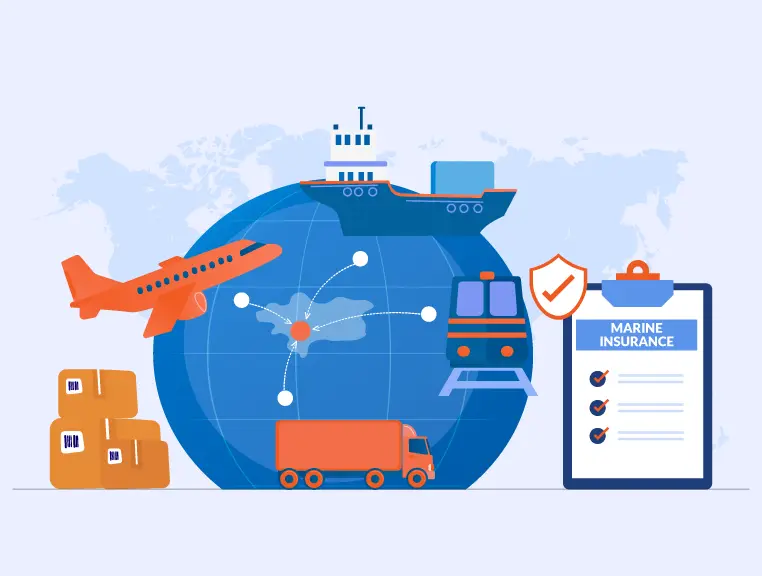



A ship represents one of the largest single assets a company can own. Whether it is a cargo vessel plying between Indian ports, a tanker on a long-haul international voyage, or a small operator’s tug in a harbour, the vessel’s hull and machinery carry enormous value, and enormous risk. Marine Hull Insurance exists to protect exactly that asset – the ship itself – against the physical perils of operating on water.
This guide addresses vessel owners, ship operators, shipping companies, charterers, financiers, exporters using their own tonnage, and insurance decision-makers who need a working, practical understanding of Marine Hull Insurance in the Indian context. It explains what Hull Insurance is, when it becomes necessary, what it typically protects, how it differs from Marine Cargo Insurance and Protection & Indemnity (P&I) Insurance, who holds insurable interest in a vessel, what Constructive Total Loss means for a claim, and how to evaluate a policy before buying.
Every insurance policy is a contract of detailed wording. Nothing in this guide should be read as a substitute for the actual policy document, its clauses, exclusions and warranties. Where coverage depends on policy terms – which is almost everywhere in Hull Insurance – this guide says so explicitly.
What Is Marine Hull Insurance?
The word “hull” refers to the watertight body of a ship – its frame, plating, deck and structural shell. In an insurance sense, the industry understands Hull Insurance more broadly to include the hull along with the machinery, engines, ordinary fittings, navigational equipment and tackle that keep the vessel operational. This is why shipping and underwriting circles frequently call the policy Hull and Machinery Insurance (H&M).
Hull policies can cover a wide range of vessels: ocean-going cargo ships, tankers, container vessels, passenger ships, ferries, tugs, barges, fishing trawlers, yachts, river craft, and specialised platforms such as offshore oil exploration rigs. The underwriting approach, clauses and pricing differ by vessel type, trade, and usage, so a policy built for a coastal cargo carrier will look quite different from one built for an offshore energy platform.
Hull vs Machinery – Are They the Same?
Hull damage refers to harm to the vessel’s physical shell and structure – for instance, a cracked plate after grounding. Machinery damage refers to harm to the engines, generators, boilers and mechanical systems that power the vessel. A Marine Hull Policy typically bundles both under one Hull and Machinery structure, though the extent of machinery cover, and whether the policy covers breakdown of machinery itself, depends heavily on the specific policy wording and any machinery damage clauses attached.
Why Vessel Owners Need Hull Insurance
A ship is a high-value, mobile asset operating in an environment full of unpredictable risk – weather, navigation hazards, mechanical failure, and the actions of other vessels. Without Hull Insurance, an owner bears the entire financial exposure of repairing or replacing a damaged vessel out of pocket. For a financed vessel, this exposure extends to the lender as well, since the vessel itself is usually the security for the loan.
How Hull Insurance Relates to Marine Cargo Insurance
People frequently confuse Marine Hull Insurance and Marine Cargo Insurance because both fall under the umbrella of Marine Insurance and both relate to a voyage. The distinction is straightforward: Hull Insurance protects the ship; Cargo Insurance protects the goods being carried on that ship. A shipping company needs Hull Insurance for its fleet; an exporter or importer typically needs Cargo Insurance for the goods in transit. The two are complementary, not interchangeable, and a business that both owns vessels and moves goods may need both policies running in parallel.
Key Takeaway
- Marine Hull Insurance covers the vessel – its hull, machinery and fittings – not the goods it carries.
- It is commonly bundled as Hull and Machinery (H&M) Insurance.
- Coverage scope, vessel eligibility and pricing vary by vessel type, trade and usage.
- It works alongside, not instead of, Marine Cargo Insurance and P&I Insurance.
When Should You Use Marine Hull Insurance?
Below are the practical situations where businesses commonly consider a Marine Hull Policy:
- Commercial vessel operations – companies running cargo ships, tankers or container vessels on domestic or international routes
- Cargo vessel ownership – owners exposed to hull and machinery damage separate from the cargo they carry
- Passenger vessel and ferry operations – where hull damage can also trigger business interruption
- Shipping companies with a fleet – needing consistent coverage across multiple vessels
- Vessel owners and operators generally, including smaller craft such as yachts, river boats and water-sports vessels
- Ship financing arrangements – banks and NBFCs financing vessel purchase typically require hull cover as a condition of the loan
- Vessel construction – shipbuilders need protection for a vessel’s rising value while they are building it
- International shipping and export/import businesses transporting their own consignments on owned or leased vessels
- Domestic coastal transportation operators moving goods or passengers along the Indian coastline
- High-value vessels where the cost of a single incident could be financially crippling without cover
- Charter operations, where the charterer’s exposure and insurable interest needs separate evaluation
Why Cargo Insurance Alone Is Not Enough
A common misunderstanding among exporters and importers who own or lease their own vessels is that Marine Cargo Insurance is sufficient protection for the entire shipment. Cargo Insurance responds to loss or damage of the goods being transported. It does not respond to damage the ship itself suffers – a cracked hull, a flooded engine room, or a fire in the machinery space. If the vessel sustains damage, the cost of repair, salvage or replacement falls entirely on the vessel owner unless the owner has a separate Hull Insurance policy in place. For any business that owns or operates the carrying vessel, relying only on cargo cover leaves the single largest asset in the transaction completely exposed.
What Does Marine Hull Insurance Protect?
Hull policies in the market commonly address the categories below, but never assume any of them automatically – always verify against the policy wording the insurer issues.
- Physical damage to the hull – structural damage to the ship’s body from collision, grounding, heavy weather or similar events
- Machinery damage – damage to engines, generators and mechanical systems, subject to the specific machinery clauses attached
- Collision-related damage – damage the insured vessel itself sustains in a collision with another vessel or a fixed object
- Fire and explosion – damage caused by fire or explosion aboard the vessel
- Storms and heavy weather – damage from severe weather encountered during a voyage
- Perils of the sea – a traditional marine insurance term covering accidental, fortuitous events at sea distinct from ordinary wear
- Accidental damage – sudden, unintended damage arising from operational mishaps
- Salvage-related costs – expenses incurred in saving the vessel from a peril insured against, where covered
- Other policy-dependent risks – such as theft of the vessel, wreck removal, or business interruption extensions, where specifically written into the policy
It bears repeating: no hull policy automatically covers every risk on this list. Insurers price and structure cover based on vessel type, trading area, claims history and the specific clauses negotiated. A policy summary or brochure is never a substitute for reading the actual wording, schedule and exclusions.
Marine Hull Insurance vs Marine Cargo Insurance
| Feature | Marine Hull Insurance | Marine Cargo Insurance |
|---|---|---|
| What is insured? | The vessel – hull, machinery and fittings | The goods being transported |
| Typical policyholder | Ship owner, operator or financier | Exporter, importer, trader or consignee |
| Main exposure | Physical loss or damage to the ship | Loss or damage to cargo in transit |
| Example loss | Hull cracked after grounding | Consignment of machinery damaged by seawater ingress |
| Typical use | Fleet operations, ship financing, vessel ownership | Single shipments, ongoing export/import trade |
| Claim example | Cost of hull and engine repair after collision | Replacement value of damaged or lost cargo |
Does a Business Need Both?
A business that owns its ships and also ships goods on them – for example, a shipping line that also trades in commodities, or an exporter running its own coastal barges – typically needs both policies. Hull Insurance protects the vessel investment; Cargo Insurance protects the value of the goods on board. For most exporters and importers who use third-party carriers, only Cargo Insurance is relevant, since they hold no insurable interest in the vessel itself.
Marine Hull Insurance vs P&I Insurance
This distinction matters because the two covers are structured, priced and often placed with entirely different types of insurer. Owners typically place Hull and Machinery with commercial insurers. Internationally, owners frequently place P&I cover with specialist mutual associations known as P&I Clubs (discussed in detail in the next section).
| Situation | Hull & Machinery | P&I Insurance |
|---|---|---|
| Damage to own vessel | Responds, subject to policy terms | Does not respond |
| Damage caused to another vessel (collision liability) | May respond via a collision liability clause where included | May respond depending on the club rules and the nature of the liability |
| Crew injury or illness liabilities | Not the primary purpose of the policy | Typically within scope, subject to policy/club terms |
| Passenger liabilities | Not the primary purpose of the policy | Typically within scope, subject to policy/club terms |
| Pollution liability to third parties | Not the primary purpose of the policy | Typically within scope, subject to policy/club terms |
| Cargo-related third-party liability | Not the primary purpose of the policy | May respond depending on the applicable terms |
In practice, most vessel owners running commercial operations carry both Hull & Machinery and P&I cover together, because the two address different sides of the same risk – the ship itself, and the owner’s liability to the world around it.
Protection & Indemnity (P&I) Insurance
P&I Insurance is fundamentally different from Hull Insurance in structure. No single standard policy form is used across the market. The underwriter – or, internationally, the P&I Club – tailors cover to the nature of the risk, the type of vessel, and the level of protection the shipowner needs. Because P&I is a contract of indemnity, the shipowner’s act of settling the underlying claim generally triggers the insurer’s obligation to pay, rather than the insurer paying the third party directly in the first instance.
What P&I Cover Commonly Addresses
- Illness, injury or loss of life among crew, and cover for passengers and dockworkers not otherwise protected by statutory compensation schemes
- Medical expenses connected with injury or illness suffered by crew, passengers or nearby workers due to the vessel’s operations
- Damage to cargo and passenger baggage, where within the scope of the policy or club rules
- Damage caused to other vessels or to fixed property such as docks and harbour equipment, excluding matters already covered under the vessel’s own Hull Insurance
- Repatriation of crew members, for example where a serious illness breaks out on board
- War and politically motivated risks such as seizure, capture and marine terrorism, where covered
- Oil spill and pollution civil liabilities, including the cost of defending and settling related lawsuits
Who Provides P&I Cover?
Internationally, P&I Insurance has traditionally been provided through P&I Clubs – non-profit mutual associations owned by their shipowner, operator and charterer members rather than by shareholders. These clubs emerged in 19th-century England at a time when commercial underwriters were reluctant to take on third-party liability risk connected with cargo and collision. Today, the major clubs form the International Group of P&I Clubs, which together cover a very large share of the world’s ocean-going tonnage, pooling member contributions to meet large claims.
P&I cover, whether from a club or a commercial insurer, is not unlimited. Certain categories of claim – for instance some employer liability claims or specific categories of crew claims – may fall outside standard club or policy rules. As with Hull Insurance, the exact scope always depends on the applicable rules, endorsements and exclusions.
For a shipowner, P&I forms an essential companion to Hull and Machinery cover, together giving reasonably rounded protection – one for the vessel, the other for liabilities to the outside world.
Insurable Interest in Marine Hull Policies
Insurable interest matters because it is the legal and commercial foundation of a valid marine insurance contract – a policy is meant to indemnify a genuine financial loss, not create a speculative payout for someone with no real stake in the vessel. In practice, several different parties connected to the same ship can each carry a separate insurable interest, and each party may insure their interest on its own terms.
Parties Who May Hold Insurable Interest
| Party | Possible Interest in Vessel | Why Insurance Matters |
|---|---|---|
| Registered / beneficial owner | Full ownership value of the hull, machinery and fittings | Bears the direct financial loss if the vessel is damaged or lost |
| Shipbuilder | Rising value of the vessel while under construction | Exposed to loss or damage during build, trials and delivery |
| Mortgagee bank / financial institution | Security value of the vessel against an outstanding loan | Needs the loan protected if the vessel is damaged before repayment |
| Charterer | Contractual and, in some structures, financial interest in the vessel’s operation | May face liability or loss exposure depending on the charter arrangement |
| Operator (where distinct from owner) | Operational and contractual interest in the vessel | Responsible for running the vessel and may carry related exposure |
| Creditor with security over the vessel | Interest limited to the extent of the loan or security | Loan recovery depends on the vessel’s continued value |
| Master and crew | Interest limited to wages | Wage recovery can be affected by certain marine losses |
How Financing Affects Insurance Requirements?
When a buyer purchases a vessel with bank or NBFC financing, the lender typically requires hull cover as a condition of the loan, in much the same way a home loan or car loan requires property or motor insurance. Parties can structure this arrangement in a few common ways: the shipowner may buy the policy and remain responsible for repaying the loan regardless of loss; the owner and the financier may each insure their respective share independently; or the owner may buy the policy and assign it to the financier, so that any claim proceeds first satisfy the financier’s outstanding interest before the insurer releases the balance to the owner. The parties should always confirm the specific structure in the loan and insurance documentation, since it directly affects who receives claim proceeds and in what order.
No one can properly insure a vessel, or pay a claim, to a party who has no legitimate financial interest in it – this is a basic principle of marine insurance, though the precise legal treatment of insurable interest in any given case depends on the applicable law and the policy wording, and a qualified advisor can best confirm it where the position is unclear.
Constructive Total Loss in Marine Hull Insurance
Constructive Total Loss is a concept distinctive to marine insurance. It recognises that a vessel can be so severely damaged, or so difficult to recover, that continuing to treat the claim as a repair situation makes no commercial sense – even though the ship still physically exists and is not a complete loss.
When Constructive Total Loss Can Arise
- The insured has been deprived of possession of the vessel by an insured peril, and recovery of the vessel is unlikely
- The cost of recovering the vessel would exceed its value once recovered
- The vessel is damaged to an extent where the cost of repair would exceed its value once repaired
- Continued repair or recovery becomes commercially impractical even though actual total loss is not yet certain
Where a vessel meets these conditions, the concept of abandonment often becomes relevant – the insured may give up their remaining interest in the wreck or the vessel’s whereabouts to the insurer in exchange for a total-loss settlement, where the applicable policy wording and law permit this. The policy and the applicable marine insurance law govern the exact mechanics of abandonment and notice requirements, and the insured should always check them before filing a claim on this basis.
Actual Total Loss vs Constructive Total Loss
| Feature | Actual Total Loss | Constructive Total Loss |
|---|---|---|
| Physical state of vessel | Vessel is physically destroyed or irretrievably lost | Vessel may still physically exist but repair or recovery is impractical |
| Basis of claim | Vessel no longer exists in its insured form | Cost of repair or recovery exceeds the vessel’s recovered/repaired value |
| Abandonment | Not generally required – the loss is total on its face | Often central to the claim, where the policy and law permit |
| Insurer’s typical response | Settles as a total loss | May settle as a total loss once CTL is established, or dispute the basis |
Illustrative Example (Hypothetical)
Suppose a mid-sized cargo vessel insured for ₹18 crore runs aground during heavy weather. Salvors estimate that refloating and towing the vessel to a repair yard would cost roughly ₹6 crore, and the subsequent structural and machinery repairs would cost a further ₹14 crore – a combined ₹20 crore against an insured value of ₹18 crore. Because the total cost of recovery and repair exceeds the vessel’s value once repaired, the owner may have grounds to treat this as a Constructive Total Loss and claim accordingly, subject to the insurer’s own assessment and the specific CTL wording in the policy. This example is illustrative only and does not represent a universal formula – every CTL determination depends on the actual costs, the policy wording, and the facts of the case.
Key Takeaway
- CTL applies when repair or recovery cost exceeds the vessel’s value once repaired or recovered.
- It differs from Actual Total Loss, where the vessel is physically destroyed or irretrievably gone.
- Abandonment is often part of a CTL claim, subject to policy wording and applicable law.
- Every CTL claim is fact-specific – treat any numeric example as illustrative, not a fixed rule.
Marine Hull Insurance Risks
Vessels face a defined set of recurring marine risks – collision, grounding, fire, explosion, storm, machinery failure, and others – but whether the policy actually covers any specific risk, and to what extent, depends entirely on the individual policy’s insured perils, clauses and exclusions.
| Risk | Example | Potential Vessel Loss | Possible Insurance Response |
|---|---|---|---|
| Collision | Vessel collides with another ship in a shipping lane | Hull breach, structural damage | May be addressed under Hull & Machinery, subject to policy terms |
| Grounding | Vessel runs aground in shallow water | Hull damage, salvage costs | May be addressed under Hull & Machinery and salvage clauses |
| Fire | Engine-room fire spreads to cargo holds | Structural and machinery damage | May be addressed under Hull & Machinery, subject to exclusions |
| Explosion | Boiler or fuel-system explosion | Severe structural damage, possible total loss | May be addressed under Hull & Machinery, subject to terms |
| Storm / heavy weather | Cyclone damages deck equipment and hull plating | Partial or total loss | May be addressed as a peril of the sea, subject to terms |
| Machinery failure | Main engine breakdown mid-voyage | Repair cost, off-hire | Coverage depends heavily on machinery clauses attached |
| Accidental damage | Cargo-handling equipment damages hull during loading | Localised structural damage | May be addressed subject to policy scope |
| Salvage situations | Vessel requires professional salvage after grounding | Salvage and associated costs | May be addressed under salvage provisions, subject to terms |
| Piracy (where applicable) | Vessel seized or damaged by pirates | Damage, ransom-related costs, delay | Coverage depends on war/piracy extensions, if purchased |
This table sets out common risk categories, not a coverage guarantee. Risk and coverage are two different things – a risk existing in the real world does not automatically mean a given policy responds to it.
What Marine Hull Insurance May Not Cover
Exclusions vary by insurer and policy wording, but common categories that hull policies often exclude, or restrict, include wear and tear, poor maintenance, intentional damage, and certain war, strike or riot risks unless specifically bought back into the policy through an extension.
The list below reflects categories frequently seen as exclusions in the market. Depending on the policy wording, a given insurer’s treatment of each item can differ, and an add-on or endorsement can reverse some exclusions.
| Potential Exclusion | Why It May Be Excluded | Can Additional Cover Apply? |
|---|---|---|
| Wear and tear / ordinary deterioration | Considered a maintenance cost, not a fortuitous insured event | Generally no – this stays outside insurance in most markets |
| Poor maintenance | Loss traceable to neglect rather than an insured peril | Depends on policy wording and whether negligence is established |
| Unseaworthiness (where applicable) | Vessel not fit for its intended voyage from the outset | Depends on the applicable warranty and policy wording |
| Intentional damage | Deliberate acts are not fortuitous losses | Not generally insurable |
| War risks | Treated as a separate, specialised risk category | Often available as a specific war-risk extension |
| Strikes, riots, civil commotion | Considered outside ordinary marine perils | Often available as a specific strikes extension |
| Mechanical/electrical breakdown | Treated as an operational risk depending on wording | Sometimes available via specific machinery-damage clauses |
| Consequential losses | Indirect losses beyond direct physical damage | May be available via specific business-interruption extensions |
Depending on the policy wording, insurers may also apply vessel-specific exclusions relating to trading area, vessel age, classification status, or crewing standards. Always request the full exclusions section of the policy, not just a benefits summary, before finalising a purchase.
Hull Insurance Policy Structure
A Marine Hull Policy can be understood as a series of layers, each narrowing the scope of what is actually paid on a claim. Working through this structure helps in reading any policy critically rather than taking a benefits brochure at face value.
Vessel
↓ the insured subject-matter
Hull
↓ the structural body covered
Machinery
↓ engines, generators and mechanical systems, per the machinery clauses
Insured Perils
↓ the specific events that trigger cover – collision, fire, storm and so on
Policy Clauses
↓ the wording that defines, extends or restricts each peril
Deductibles
↓ the amount the insured bears before the insurer’s liability starts
Exclusions
↓ situations and causes the policy does not respond to
Claims / Settlement
The amount actually paid, after applying the deductible and any average or under-insurance adjustment
Each layer narrows the one above it. A vessel may be listed as insured, a peril may be listed as covered, and a claim can still be reduced or declined at the exclusions or deductible stage. Reading a hull policy means working through every layer, not stopping at the insured-perils list.
Marine Hull Insurance Buying Guide
Evaluating a Hull Insurance policy is a more technical exercise than most commercial insurance purchases, because the underwriting depends heavily on the specific vessel and its trade. Underwriters commonly assess the factors below and should be reviewed by the buyer as well.
| Factor | What to Check | Why It Matters |
|---|---|---|
| Type of vessel | Cargo, tanker, passenger, offshore, or specialised craft | Different vessel types carry different risk profiles and clause sets |
| Vessel age | Year built, classification status, survey history | Older vessels may face tighter terms or higher premiums |
| Vessel value | Basis of valuation – agreed value vs market value | Determines the sum insured and affects CTL calculations |
| Construction | Materials, build standard, classification society | Affects durability and underwriting risk assessment |
| Trading area/route | Geographic limits, seasonal weather exposure | Certain waters carry higher storm, piracy or congestion risk |
| Vessel usage | Commercial cargo, passenger, charter, offshore support | Usage changes the applicable clauses and pricing |
| Previous claims | Claims history on the vessel and the owner/operator | Affects terms, deductibles and premium loading |
| Machinery condition | Age, maintenance records, survey reports | Directly affects machinery-damage coverage terms |
| Crew | Qualification, certification, manning levels | Crew competence affects both risk and P&I exposure |
| Deductible | Per-claim deductible amount and structure | Higher deductibles usually lower premium but raise self-retained risk |
| Policy limits | Sum insured and any sub-limits by peril | Determines maximum claim payable |
| Clauses and exclusions | Full wording, not just the summary | Determines what is actually covered in practice |
| War and strike extensions | Whether these are included, excluded or available as add-ons | Relevant for vessels trading in higher-risk regions |
| Salvage provisions | How salvage costs and general average are treated | Affects claim outcome in emergency situations |
| Survey requirements | Pre-inception or periodic survey obligations | Non-compliance can affect claim validity |
| Claims support | Insurer’s claims process, surveyors and turnaround | Affects how quickly and smoothly a genuine claim is settled |
Marine Hull Insurance Pre-Voyage Checklist
Before a vessel departs on a voyage, or before renewing a policy, it helps to run through a structured checklist rather than relying on memory. The following checklist is a practical starting point – insurers and brokers may add items specific to the vessel or trade.
- Confirm vessel valuation and that the sum insured reflects current value
- Confirm the policy period covers the full duration of the voyage or operation
- Verify the trading area matches the vessel’s actual planned route
- Review the list of insured perils against the vessel’s realistic risk exposure
- Check applicable deductibles for each type of claim
- Review exclusions carefully, including any vessel-specific exclusions
- Verify the extent of machinery coverage under the policy
- Check any warranties the policy requires the insured to maintain
- Confirm survey requirements have been met before departure
- Review claims notification requirements – timelines and documentation
- Check whether P&I cover is also required for this voyage or operation
- Confirm any financing or mortgage-related insurance requirements are satisfied
- Review war/strike extensions if the route passes through higher-risk waters
- Confirm all policy documents, schedules and endorsements are in hand
- Verify contact details and procedure for reporting a claim in an emergency
Practical Scenarios
The following hypothetical scenarios illustrate how Hull, Cargo and P&I Insurance interact in practice. They are illustrative only – actual outcomes depend on the specific policy wording, facts and applicable law.
Scenario 1: Collision Damage to a Cargo Vessel
What happened: A cargo vessel collides with another ship while manoeuvring near a port, damaging its bow section.
Insurance that could respond: Marine Hull Insurance for the vessel’s own damage; P&I Insurance if the other vessel or its cargo is also damaged.
Why: Hull & Machinery responds to physical damage to the insured vessel; P&I addresses the owner’s liability for damage caused to the third party.
What to check in the policy wording: The collision liability clause under Hull cover, the sue-and-labour or salvage provisions, and the applicable P&I terms for third-party damage.
Scenario 2: Extensive Machinery Damage
What happened: A vessel suffers a major engine failure mid-voyage after a mechanical fault, requiring a tow to port and extensive repairs.
Insurance that could respond: Marine Hull Insurance, if machinery damage is within the scope of the policy’s machinery clauses.
Why: Machinery forms part of a Hull and Machinery policy, but coverage for breakdown-type damage (as opposed to damage from an external peril) depends heavily on the specific clauses attached.
What to check in the policy wording: Whether the policy includes machinery breakdown cover, or only machinery damage arising from an insured external peril.
Scenario 3: Vessel Becomes Economically Impractical to Repair
What happened: After grounding in a storm, survey reports show that recovery and repair costs would exceed the vessel’s repaired value.
Insurance that could respond: A Constructive Total Loss claim under the Marine Hull Insurance policy.
Why: Where repair or recovery cost exceeds the vessel’s value once repaired or recovered, the insured may have grounds for a CTL claim, subject to the insurer’s assessment.
What to check in the policy wording: The CTL clause, abandonment provisions, and the valuation basis used in the policy.
Scenario 4: Vessel Causes Damage to Another Vessel
What happened: The insured vessel collides with a moored vessel, damaging its hull and onboard equipment.
Insurance that could respond: P&I Insurance for the liability to the third-party vessel; Hull Insurance for any damage to the insured’s own vessel.
Why: Liability to third parties for property damage is a core P&I exposure; the insured’s own vessel damage is a Hull matter.
What to check in the policy wording: The applicable club rules or P&I policy terms, and any collision liability clause under the Hull policy.
Scenario 5: Shipowner Faces Pollution Liability
What happened: An oil leak from the insured vessel causes contamination near the coastline, triggering clean-up costs and third-party claims.
Insurance that could respond: P&I Insurance, where pollution liability is within the scope of the applicable club rules or policy.
Why: Pollution liability to third parties is a classic P&I exposure rather than a Hull matter, since it concerns harm to others rather than damage to the vessel itself.
What to check in the policy wording: The pollution liability provisions in the P&I policy or club rules, including any sub-limits.
Scenario 6: Vessel Is Financed by a Bank
What happened: A shipping company takes a bank loan to purchase a new cargo vessel, and the bank requires insurance as a loan condition.
Insurance that could respond: Marine Hull Insurance, often with the bank’s interest noted or the policy assigned to the financier.
Why: The bank’s insurable interest lies in the vessel’s value as loan security; Hull Insurance protects that security along with the owner’s own interest.
What to check in the policy wording: The loss-payee or assignment clause, and how claim proceeds are allocated between the financier and the owner.
Marine Hull Insurance Decision Framework
The simple decision path below helps separate the three related but distinct covers discussed in this guide.
Do you own or operate a vessel?
↓ Yes
Do you need protection for physical damage to that vessel?
↓ Yes → Consider Marine Hull (Hull & Machinery) Insurance
Could you face liability to third parties – other vessels, crew, passengers, pollution?
↓ Yes → Consider P&I Insurance
Are goods being transported, whether on your vessel or someone else’s?
↓ Yes → Consider Marine Cargo Insurance
Most commercial vessel operators end up needing a combination of all three, with the exact mix depending on ownership, financing, trade and the goods actually being carried.
Myth vs Fact: Marine Hull Insurance
1. Hull Insurance Automatically Covers the Cargo on Board
Myth: Hull Insurance automatically covers the cargo on board.
Fact: Hull Insurance covers the vessel. Cargo requires a separate Marine Cargo Insurance policy.
2. P&I Insurance and Hull Insurance Are the Same Thing
Myth: P&I Insurance and Hull Insurance are the same thing.
Fact: They cover different exposures – Hull covers the vessel’s own damage; P&I covers third-party liabilities.
3. Only Large Shipping Companies Need Hull Insurance
Myth: Only large shipping companies need Hull Insurance.
Fact: Any owner or operator with an insurable interest in a vessel – including small operators, yacht owners and financiers – may need it.
4. A Vessel Mortgage Eliminates the Owner’s Insurance Responsibility
Myth: A vessel mortgage eliminates the owner’s insurance responsibility.
Fact: The owner typically remains responsible for insuring the vessel; the lender’s interest is usually protected alongside, not instead of, the owner’s obligation.
5. Machinery Damage Is Always Covered Under Hull Insurance
Myth: Hull Insurance always covers machinery damage.
Fact: Machinery cover depends on the specific clauses attached; insurers often treat breakdown-type damage differently from damage an external peril causes.
6. Constructive Total Loss Means the Vessel Is Physically Destroyed
Myth: Constructive Total Loss means the vessel is physically destroyed.
Fact: CTL can apply even when the vessel still exists physically, where repair or recovery cost exceeds its value once repaired or recovered.
7. Cargo Insurance Protects the Ship Itself
Myth: Cargo Insurance protects the ship itself.
Fact: Cargo Insurance protects the goods being transported, not the carrying vessel.
8. Marine Hull Insurance Covers Every Marine Peril Automatically
Myth: Marine Hull Insurance covers every marine peril automatically.
Fact: Coverage depends entirely on the insured perils, clauses and exclusions in the specific policy purchased.
9. P&I Covers Physical Damage to the Insured’s Own Vessel
Myth: P&I covers physical damage to the insured’s own vessel.
Fact: P&I is primarily a liability cover for third-party exposures, not a substitute for Hull Insurance.
10. A Vessel Can Be Validly Insured Even Without a Legitimate Insurable Interest
Myth: A vessel can be validly insured even without a legitimate insurable interest.
Fact: Insurable interest is a foundational requirement of a valid marine insurance contract.
11. Hull Policies Cover Wear and Tear Like Any Other Marine Peril
Myth: Hull policies cover wear and tear like any other marine peril.
Fact: Policies generally exclude wear and tear and ordinary deterioration, since these are maintenance issues rather than fortuitous losses.
12. Standard Hull Policies Automatically Include War Risks
Myth: Standard Hull policies automatically include war risks.
Fact: Standard cover commonly excludes war risks and usually requires a specific extension.
13. Buying Hull Insurance Is as Simple as Buying a Small Commercial Policy
Myth: Buying Hull Insurance is as simple as buying a small commercial policy.
Fact: Hull underwriting is technical and vessel-specific, often requiring surveys, valuations and detailed documentation.
Marine Hull Insurance in the Indian Context
India’s marine insurance market operates within the framework regulated by the Insurance Regulatory and Development Authority of India (IRDAI). Indian shipowners, coastal transport operators, offshore energy companies, and import/export businesses that own or finance their own vessels all fall within the scope of needing Hull Insurance considerations, whether the vessel trades domestically between Indian ports or internationally.
It is important to keep three distinct concepts separate when discussing whether Hull Insurance is “required”:
- Legal requirement – an obligation imposed directly by statute or regulation. This guide does not assert that Hull Insurance is legally mandatory in every circumstance; where a specific legal requirement is relevant to a vessel’s registration, flag or operation, it should be confirmed with the applicable maritime and regulatory authorities.
- Contractual requirement – an obligation imposed by a third party through a contract, most commonly a financier requiring hull cover as a condition of a ship loan, or a charter party requiring specific insurance.
- Risk-management recommendation – the practical, prudent case for insuring a high-value, high-risk asset, independent of any legal or contractual obligation.
For authoritative, current information on regulatory requirements, we encourage Indian vessel owners and operators to consult IRDAI, the Directorate General of Shipping, and the Ministry of Ports, Shipping and Waterways directly, since regulatory positions can change and fall outside the scope of this guide.
Frequently Asked Questions
Q) What is Marine Hull Insurance?
A) Marine Hull Insurance is a policy that covers physical loss or damage to a ship’s hull, machinery and fittings from marine perils such as collision, fire, grounding and heavy weather. It protects the vessel itself, not the cargo it carries or the owner’s third-party liabilities. Exact coverage depends on the policy wording, clauses and exclusions chosen at the time of purchase.
Q) What does Marine Hull Insurance cover?
A) Depending on the policy, it can cover physical damage to the hull and machinery arising from perils such as collision, grounding, fire, explosion, storm and other perils of the sea, along with associated costs like salvage where included. Coverage is never automatic across every risk – it depends entirely on the insured perils and exclusions written into the specific policy.
Q) Why is Marine Hull Insurance important?
A) A ship is typically one of the most valuable assets its owner holds, and it operates in an environment with significant physical risk. Without Hull Insurance, the owner bears the full cost of repair, salvage or replacement out of pocket, which can be financially severe for a single incident.
Q) Who needs Marine Hull Insurance?
A) Shipowners, ship operators, shipping companies, ship-financing banks, shipbuilders, ship-breakers, offshore energy operators, and owners of smaller commercial or recreational vessels such as yachts and river craft may all need Hull Insurance, depending on their insurable interest in the vessel.
Q) What is a Marine Hull Insurance policy?
A) It is a contract between the insurer and the insured (typically the owner, operator or financier of a vessel) under which the insurer agrees, subject to the policy’s terms, to indemnify the insured for physical loss or damage to the insured vessel from covered perils.
Q) What is the difference between Hull Insurance and Cargo Insurance?
A) Hull Insurance covers the vessel itself – its structure and machinery. Cargo Insurance covers the goods being transported on that vessel. They protect different subject-matters and are typically bought by different parties: the vessel owner for Hull, and the cargo owner (exporter, importer or trader) for Cargo.
Q) What is the difference between Hull Insurance and P&I Insurance?
A) Hull and Machinery Insurance covers physical damage to the insured vessel itself. P&I Insurance covers the shipowner’s liability to third parties – including crew, passengers, other vessels, and pollution-related claims. Hull looks inward at the ship; P&I looks outward at the owner’s legal exposure.
Q) What is Marine Protection and Indemnity Insurance?
A) Marine Protection and Indemnity (P&I) Insurance is a liability cover for shipowners and operators, addressing third-party claims connected with operating a vessel, such as crew and passenger injury, damage to other vessels or property, and pollution liabilities, subject to the applicable policy or club rules.
Q) What does P&I Insurance cover?
A) Depending on the policy or club rules, P&I can address crew and passenger injury or illness, medical expenses, cargo and baggage liabilities, damage to other vessels or fixed property, crew repatriation, certain war-related risks, and pollution civil liabilities, including associated legal defence costs.
Q) What is insurable interest in Marine Hull Insurance?
A) Insurable interest is a legally recognised financial stake in a vessel, such that the party would suffer a genuine financial loss if the vessel were damaged or lost. It is a foundational requirement for a valid marine insurance contract.
Q) Who can have an insurable interest in a Marine Hull Policy?
A) Registered and beneficial owners, shipbuilders during construction, mortgagee banks and financial institutions, certain charterers, operators, and other parties with a recognised financial stake in the vessel can each hold their own distinct insurable interest.
Q) What is Constructive Total Loss in Marine Hull Insurance?
A) Constructive Total Loss (CTL) occurs when the cost of repairing or recovering a damaged vessel exceeds its value once repaired or recovered, making repair economically impractical even though the vessel still physically exists.
Q) What is the difference between Actual Total Loss and Constructive Total Loss?
A) Actual Total Loss means the vessel is physically destroyed or irretrievably lost. Constructive Total Loss means the vessel may still physically exist, but the cost of repair or recovery exceeds its repaired or recovered value, making the loss commercially equivalent to a total loss.
Q) Does Hull Insurance cover machinery damage?
A) It can, but coverage for machinery depends heavily on the specific machinery clauses attached to the policy. Damage from an external insured peril is often treated differently from a mechanical or electrical breakdown.
Q) Does Marine Hull Insurance cover collision damage?
A) It can cover damage the insured vessel itself sustains in a collision, subject to the policy’s insured perils and any collision liability clause. Liability for damage caused to the other vessel is typically a P&I matter.
Q) Does Marine Hull Insurance cover fire?
A) Fire is commonly included among insured perils in hull policies, subject to the specific wording and any related exclusions in the policy purchased.
Q) What are common exclusions under Marine Hull Insurance?
A) Frequently seen exclusions include wear and tear, ordinary deterioration, poor maintenance, intentional damage, and certain war, strike or riot risks unless specifically bought back through an extension. Exact exclusions vary by insurer and policy.
Q) Is Marine Hull Insurance mandatory?
A) This depends on the specific legal, regulatory or contractual context – for instance, a financier may require it as a loan condition. It should not be assumed to be a universal legal requirement without checking the applicable law and contractual obligations.
Q) When should a vessel owner buy Hull Insurance?
A) Ideally before the vessel begins operations, takes delivery from a shipbuilder, or someone pledges it as loan security – and the owner should review it at every renewal as the vessel’s value, trade and risk profile change.
Q) Does Cargo Insurance protect the vessel?
A) No. Cargo Insurance protects the goods being transported. It does not respond to physical damage suffered by the carrying vessel.
Q) Can a bank or mortgagee have an insurable interest in a vessel?
A) Yes. A bank or financial institution that has loaned money against the vessel as security has an insurable interest to the extent of that loan.
Q) What insurance does a shipowner need?
A) Most commercial shipowners need a combination of Hull and Machinery Insurance for the vessel itself, and P&I Insurance for third-party liabilities. Cargo Insurance becomes relevant if the owner also has an interest in goods being transported.
Q) Do shipowners need both Hull and P&I Insurance?
A) In most commercial operations, yes. Hull and Machinery addresses damage to the vessel; P&I addresses liability to third parties. Together they give more rounded protection than either alone.
Q) What risks are covered by Marine Hull Insurance?
A) Commonly addressed risks include collision, grounding, fire, explosion, storm and heavy weather, and other perils of the sea, along with related costs like salvage where included – always subject to the specific policy’s insured perils and exclusions.
Q) What is Hull and Machinery Insurance?
A) Hull and Machinery (H&M) Insurance is the common market term for Marine Hull Insurance that bundles cover for the vessel’s structural hull together with its engines and mechanical systems under one policy.
Q) How does a Marine Hull Insurance claim work?
A) Typically, the insured notifies the insurer promptly after a loss, a surveyor assesses the damage, the claim is evaluated against the policy’s insured perils and exclusions, and a settlement is agreed – either as a repair cost reimbursement or, where applicable, as a total or constructive total loss payout.
Q) What documents may be required for a Hull Insurance claim?
A) Commonly requested documents include the policy schedule, survey reports, vessel logs, incident reports, repair estimates or invoices, and any relevant correspondence with port or maritime authorities. Exact requirements vary by insurer and by the nature of the claim.
Q) What is the role of deductibles in Hull Insurance?
A) A deductible is the amount the insured bears before the insurer’s payment obligation begins on a claim. Higher deductibles typically reduce premium but increase the insured’s own retained risk.
Q) Does Marine Hull Insurance cover war risks?
A) War risks are commonly excluded from standard hull cover and usually require a specific war-risk extension, particularly for vessels trading through higher-risk regions.
Q) Does Marine Hull Insurance cover piracy?
A) Coverage for piracy-related loss or damage depends on whether the policy includes a relevant war-risk or piracy extension; it is not always part of standard cover.
Q) What should I check before buying Hull Insurance?
A) Review the vessel details, sum insured basis, insured perils, exclusions, deductibles, machinery clauses, trading-area limits, survey requirements, and claims support offered by the insurer – the buying guide and checklist in this article set these out in detail.
Q) How is Marine Hull Insurance different from Marine Cargo Insurance?
A) Hull Insurance protects the vessel; Cargo Insurance protects the goods on board. They insure different subject-matters and are usually held by different parties.
Q) Can charterers have an insurable interest in a vessel?
A) Charterers can have a contractual and, depending on the charter structure, a financial interest in the vessel’s operation, though the nature and extent of that interest depends on the specific charter arrangement.
Q) What happens if a vessel suffers a Constructive Total Loss?
A) Where CTL is established under the policy, the insurer typically settles the claim as though the vessel were a total loss, often alongside abandonment of the insured’s remaining interest in the vessel, subject to the specific policy wording and applicable law.
Q) What insurance should a vessel owner consider for physical damage and third-party liability?
A) Physical damage to the vessel is typically addressed through Hull and Machinery Insurance, while third-party liability is typically addressed through P&I Insurance – most commercial owners carry both together.